
Your needs, this model
Does it fit your priorities?
Would a standalone QWERTY keyboard be enough, without an app or computer?
The exact PT-11Q guide documents local QWERTY typing, an eight-character display, and manual printing; no app or computer workflow is documented.
Explore this need in the finder →Are two lines on 9 or 12 mm original TZ tape sufficient, rather than requiring 18 mm?
The exact guide limits two lines to 9- or 12-mm TZ tape and lists no 18-mm option. Brother’s page-listed TZe route is separately limited to 12 mm.
Explore this need in the finder →Would optional wall power be useful if a separate compatible adapter is acceptable?
The guide documents six AAA cells or an optional Brother AD-30 AC adapter; the package contents of an individual used unit are not confirmed.
Explore this need in the finder →Can you cut labels by hand, or is an automatic cut essential?
The guide shows a hand-operated cutter lever and does not document automatic cutting.
Explore this need in the finder →A compact keyboard-first labeler, not a connected printer
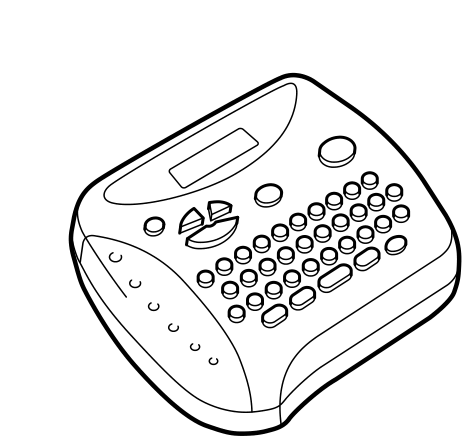
The Brother P-touch PT-11Q is a discontinued, self-contained handheld label maker. Its exact model guide describes a 42-key QWERTY keyboard and a one-line LCD window that shows eight characters at a time. The entered text can be up to 55 characters, but the narrow window scrolls across it rather than showing a whole label at once. That distinction matters: if you make brief file, shelf, or equipment labels and prefer typing on the device, the direct workflow is simple; if you proofread long names, dates, or codes, expect to move through the text before printing.
This is an earlier-model reference, not a default choice for someone buying a currently supported machine. Brother marks the PT11Q discontinued on its U.S. product page. It has no documented phone, computer, Bluetooth, or network workflow in the checked exact-model sources. Compose and format at the keypad, feed tape, and operate the cutter by hand. That independence is useful when a phone app would be overkill, but it is not a substitute for batch design or modern device integration.
Its feature set is useful but intentionally small-scale
The guide gives five character sizes, nine print styles, frames, mirror printing, accented characters, 72 symbols, repeat copies, and numbering. These basics add variety without another device, but settings are chosen through the short screen. The manual documents up to nine text files and 300 characters total, with a 55-character cap per file. It also says a power interruption longer than three minutes clears text and stored files, and the machine shuts off after five minutes idle.
These are format controls, not a library of editable templates. The eight-character display is a proofing bottleneck, and Brother specifies 10 mm per second. For occasional short identifiers this can work; for changing batches, a computer-fed model or automatic cutter is less fussy.
Resolve the cassette-family conflict before relying on it
The most important buying constraint is media identity. Brother’s exact PT-11Q guide says to use original TZ cassettes, lists 6, 9, and 12 mm widths, and says two text lines are available only with 9- or 12-mm tape. The guide calls a TZ cassette supplied with the machine, but that statement does not tell you what remains in a second-hand seller’s box today.
Brother’s current U.S. PT11Q page presents a conflicting structured specification: it lists TZe tape in 3.5, 6, 9, and 12 mm, and gives two as the maximum print-line count. The page and the original guide both identify PT11Q, but Brother’s U.S. detailed-specification and manual-index routes did not return usable model records during this check. I therefore keep the guide-backed original-TZ setup separate from the later page-listed TZe setup rather than silently blending widths or line limits. An 18-mm cassette is not established for either profile. The guide-backed TZ line limit also should not be transferred to TZe by assumption.
If you already own a PT-11Q, look at the actual cassette label and the machine’s own model label before buying supplies; do not treat TZ and TZe as interchangeable names. If TZe, 3.5-mm tape, or a dependable current supply route is essential, a currently listed TZe model such as the Brother PT-H110 is the more straightforward comparison. If a PT-11Q listing is vague about the cassette, ask for a clear photo of its tape bay or an installed tape code rather than paying on a generic “P-touch compatible” claim.
Power and cutting add hands-on steps
The PT-11Q runs on six AAA alkaline batteries or Brother’s optional AD-30 AC adapter. The guide gives 7 V, 1.2 A for the adapter. It does not establish that either power source is included in a particular used-unit listing, so confirm the actual package and test it. The illustrated guide shows a manual cutter lever; there is no documented automatic cut-after-each-label function. That is manageable for a few labels at a time, but repetitive work means handling each cut yourself. The guide also instructs the user to feed tape after installing a cassette and warns against cutting while the device is printing or feeding.
Brother’s current product table labels “Standard Memory” as 15, while the older exact-model guide describes nine text files and 300 characters total. Because the page does not define the unit for its figure and the documents disagree, I do not translate “15” into a claim about saved files or usable text capacity. The manual’s explicit limits are the safer reference for someone assessing an older unit.
Who should keep it in the comparison
The PT-11Q may suit a patient user who wants a standalone QWERTY handheld, has confirmed the tape family for the particular unit, and needs short, mostly one- or two-line labels. Its small size and direct keypad do not require a computer or phone, and the stored-text feature can help reuse a few short identifiers. The low print speed, short display window, manual cutter, replaceable batteries, and aging-media question all matter more if you label frequently.
Choose a current-reference alternative if you need a well-documented TZe supply path, a larger screen, up-to-date software support, or less manual work. The PT-H110 is a more useful like-for-like handheld comparison for straightforward TZe labels; the PT-2030 offers a desktop format and different on-device controls but is also discontinued. Neither alternative removes the need to match cassette family, width, and package contents to your actual job.
Bottom line: PT-11Q is a basic, standalone QWERTY maker with a useful set of old-school formatting controls and a compact, eight-character display. Its exact manual supports original TZ at 6–12 mm, while Brother’s current U.S. product table separately lists TZe through 12 mm. Since that conflict is unresolved and the machine is discontinued, treat it as an earlier model for an owner who can verify the exact unit and cassette—not as a current all-purpose recommendation.
Key details at a glance
| Full-color output | No |
|---|---|
| Print process | thermal_transfer |
| Maximum tape width | 12 mm |
| Compatible cassette | Conflicting exact-model source profiles retained: its Brother manual says original TZ only at 6/9/12 mm; its current U.S. product table lists TZe 3.5/6/9/12 mm. No source supports 18 mm. Keep tape families and their line claims separate; verify actual media on a used unit. |
| On-device preview characters | 8 |
| Display type | LCD |
| Maximum lines per label | 2 |
| Letter-key arrangement | qwerty |
| Wired Ethernet | No |
| Original TZ maximum width | 12 mm |
Use the exact model’s instructions for operating limits, supplied equipment and version differences.
Sources for this assessment
Put the device and its tape system together.
Match the exact model, cassette family, computer or network route and any optional power or touch-panel hardware before buying.