
Your needs, this model
Does it fit your priorities?
Can you compose labels on a local QWERTY keyboard rather than a phone?
The exact PT-1750 U.S. specification and current product table say QWERTY; its exact guide has no phone or computer design path. This is an earlier-model plan and the printed cassette-bay mark still needs checking.
Explore this need in the finder →Would a Brother TZe route up to 18 mm work if you verify the exact unit marking?
The PT-1750 U.S. supply listing names 18 mm TZe and the exact FAQ says TZe can be used, but its current product-table width field ends at 12 mm. Inspect the unit label before treating 18 mm TZe as essential.
Explore this need in the finder →Do you need the legacy guide’s 18 mm original TZ route rather than TZe?
The exact English/Spanish manual lists original TZ at 6/9/12/18 mm and permits two lines at 18 mm; its manual-backed route does not imply that 24 mm TZ fits.
Explore this need in the finder →Can you cut each label manually, or is an automatic cut essential?
Brother documents a manual cutter lever and no automatic cutter. This is reasonable for occasional labels, not a match if the machine must cut every strip automatically.
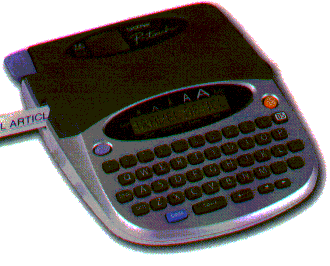
Explore this need in the finder →The discontinued Brother P-touch PT-1750 is a desk-sized label maker for people who prefer on-device QWERTY typing to phone or computer composition. It has a one-line, 15-character LCD, two-line entry on wider tape and a 9 mm maximum print height in Brother’s U.S. specification. Its cassette claims conflict across Brother sources, so check the individual unit’s tape-bay markings before buying.
Read the cassette route before choosing a width
The exact U.S. manual specifies original TZ tape at 6, 9, 12 and 18 mm: one line on 6 mm, up to two on the wider options. Brother’s current PT-1750 product table instead lists TZe at 3.5, 6, 9 and 12 mm; its exact consumables page also lists 18 mm TZe, and a U.S. FAQ allows TZe while directing owners to check the tape-family logo and width on their machine. A consumables listing does not prove every used unit bears the TZe-18 mark. Keep the original-TZ and TZe routes distinct; width alone does not establish cassette compatibility.
PT-1750SC is a separate U.S. listing code, but its exact page repeats the PT-1750 machine features and does not disclose carton contents. Treat it as the same documented printer hardware, not a confirmed bundle. A period brochure says the original PT-1750 included a 12 mm black-on-white TZ cassette; that does not establish what a PT-1750SC or used offer includes.
Local typing is the point; two lines are a width decision
Brother specifies a 49-key QWERTY keyboard, 60-character working text, up to two printed lines, and 300 characters of memory in at most nine storage areas. Numbering and repeat copies each run from one to nine. That suits repeated cupboard, file or workshop identifiers, not spreadsheet import or bulk template management. The manual limits 6 mm TZ to one line; two lines are available on 9, 12 and 18 mm TZ.
Brother documents six text sizes, a set of styles, underlining, mirror printing and four frame patterns. The brochure and later specifications disagree on the numeric symbol total (48 in the 2001 brochure, 57 on the current product page, and 178 combined characters/symbols in the old technical table), so the assessment does not treat a symbol count as a capability threshold. The specification gives 180 dpi/64 dots and a 10 mm-per-second speed; this is a compact character labeler, not a high-resolution graphics printer. Two-line labels revert to Normal style in the manual, so don’t assume decorative font choices persist in a two-row layout.
It cannot replace a connected label workflow
The U.S. specifications say no PC connection or interface, and the exact device has no documented phone app, Wi-Fi or Bluetooth path. Composition happens on the keypad. The machine can number labels and print repeat copies, but Brother lists no multi-block function, barcode support or prepared templates. If you need a desktop editor or modern app, this is the wrong operating plan even if the width seems attractive. A current PT-D410 is a clearer alternative for standard TZe labels up to 18 mm with USB-connected P-touch Editor; it still uses manual cutting, but avoids buying into a discontinued keypad-only platform.
Power and finishing require unit-by-unit checks
Both Brother’s U.S. guide and technical page specify six AA cells or an AC adapter, but they disagree on the adapter identity: the guide says AD-24 and the spec table says AD-30. Neither confirms that an adapter is included. The product table also says label-length setting is available while the old technical table says no; don’t buy on either disputed feature without checking the actual machine and manual. The manufacturer describes a manual cutter, not an automatic cutter. For occasional labels this avoids a powered cut mechanism; for a long run of short strips, repeated hand cutting and feed handling can become a nuisance.
Brother lists a 6.9 × 7.9 × 2.0 inch body and 1.4 lb weight without batteries and cassette in the U.S. technical page and user guide. The 2001 brochure gives 1.3 lb, so treat that as a historical specification discrepancy rather than a precision claim. Six AA cells make the unit independent of a wall outlet, but this is still much larger than a pocket handheld. The manual advises keeping the head and rollers clean; it warns against pulling the tape while it feeds and calls out heat, dust, sunlight and rain as conditions to avoid. No rating establishes safe outdoor installation or adhesion to a particular cable jacket, wall paint or chemical surface.
Who should consider it now?
Choose the PT-1750 only when its earlier-model status is acceptable, on-device QWERTY entry is useful, the manual cutter fits your pace and you can confirm the exact cassette mark and power adapter for the individual machine. It can suit a small office or hobby bench that needs a modest two-line label and values the supported 18 mm original-TZ route. It is a poor fit when you require an automatic cutter, a computer or phone editor, a guaranteed included adapter, an in-box PT1750SC accessory list, a confirmed current stock offer or certainty that every unit accepts TZe-18. If the width/media combination is essential and you cannot inspect the cassette logo, prefer a current documented alternative such as the PT-D410 rather than treating legacy page fields as interchangeable.
Before buying a used unit, read the model plate, photograph the cassette-bay family and width marks, test the cutter and display, and ask for a photo of the actual included adapter and tape. Brother’s PT-1750 U.S. product page, U.S. manual index, model guide, and Brother cassette-marking FAQ give the relevant checks. Discontinued does not mean unavailable, and this review makes no claim about price, present stock or used-unit condition.
Key details at a glance
| Maximum tape width | 18 mm |
|---|---|
| Compatible cassette | Brother’s exact PT-1750 U.S. manual/spec list original TZ 6/9/12/18 mm. Current exact product table lists TZe 3.5/6/9/12; the exact U.S. PT-1750 consumables page lists TZe up to 18 mm and exact U.S. Brother FAQs say TZe can be used while instructing owners to inspect the unit’s tape-family logo and width marking. Source-specific plans remain separate; individual-unit marking is the deciding compatibility check. |
| Built-in templates | 0 |
| On-device preview characters | 15 |
| Display type | LCD, 15 characters × 1 line; backlight not documented |
| Maximum combined print height | 9 mm |
| Maximum lines per label | 2 |
| Line-count note | Exact U.S. PT-1750 manual: 6 mm supports one line; 9, 12 and 18 mm support up to two lines. No TZe-specific width/line table was found. |
| On-device frames | 4 |
| Saved label files | 9 |
| Body dimensions | The exact U.S. technical table and user guide give 6.9 × 7.9 × 2.0 in and 1.4 lb without batteries/cassette. The 2001 brochure says 1.3 lb, retained as a conflicting historical weight claim. |
| Letter-key arrangement | qwerty |
| Built-in type styles | 9 |
Use the exact model’s instructions for operating limits, supplied equipment and version differences.
Sources for this assessment
- Exact Brother PT1750 product page (current U.S. description and structured product table)
- Exact Brother PT1750SC product page
- Brother PT1750 U.S. product-support page
- Brother PT1750SC U.S. product-support page
- Brother U.S. PT-1750 technical specifications
- Brother U.S. PT-1750 manual index
- Brother U.S. PT-1750 English/Spanish User’s Guide
- Brother PT-1750 promotional brochure, 2001
- Brother U.S. PT-1750 FAQ on reading TZ/TZe cassette markings
- Brother U.S. PT-1750 FAQ: TZe compatibility
- Brother U.S. PT-1750 tape consumables listing
Put the device and its tape system together.
Match the exact model, cassette family, computer or network route and any optional power or touch-panel hardware before buying.