
Your needs, this model
Does it fit your priorities?
Would the PT-25’s local QWERTY entry suit your routine?
Brother’s exact product page identifies QWERTY keys, but does not document a phone or computer input route for this earlier unit.
Explore this need in the finder →Can you work with the TC cartridges Brother directly names for this older model?
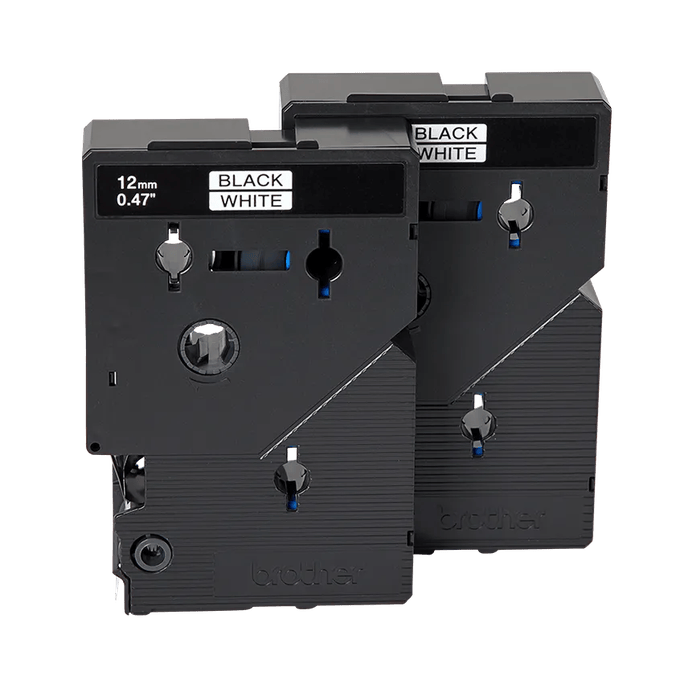
Brother’s TC20Z1 and TC20 supply pages list PT-25 as compatible at 9 mm and 12 mm. The PT-25 page also has a conflicting TZe table, so the TC route is documented while the broader family conflict remains explicit.
Explore this need in the finder →Are two lines of local text enough, without requiring computer editing?
Brother’s exact product page states a two-line maximum and a label-length setting. Computer editing is not confirmed for this unit, and unknown connectivity should not satisfy an essential USB requirement.
Explore this need in the finder →The PT-25 is an earlier model to identify carefully
Brother lists the PT-25 as discontinued, so this is most useful to someone comparing a specific used unit or trying to keep an existing machine supplied—not as a current-buy recommendation. Brother’s exact U.S. PT-25 product page identifies the model, reports a QWERTY keyboard, two-line maximum and label-length setting, and describes laminated thermal-transfer printing. That gives a limited but real outline: it is a local-keyboard label maker for short labels, not a documented computer or phone printer.
The first decision is whether you want an older physical-keyboard workflow at all. The QWERTY layout means the PT-25 is not dependent on an app to enter text. That can be a useful distinction for a person who prefers pressing keys directly, but the available exact U.S. record does not establish a phone app, Bluetooth, Wi-Fi, USB design route or current software support. If any of those is essential, treat the PT-25 as a poor fit until documentation for the exact unit proves otherwise. A current printer that Brother recommends as a replacement may be a better place to compare, but a replacement suggestion is not proof that the machines share media, features or package contents.
Resolve the cassette question before relying on a tape choice
PT-25 media needs more care than a simple “TZe-compatible” badge. Brother’s current PT-25 specification table names TZe cassettes in 3.5, 6, 9 and 12 mm widths. Yet the same exact-model product page recommends several TC accessories, and Brother’s current TC20Z1 and TC20 product pages each list PT-25 as a compatible maker. Those two TC cartridges are specifically listed as 9 mm and 12 mm. The exact compatibility links are stronger than a generic family label for identifying those two supplies, but they do not resolve the PT-25 page’s separate TZe fields or prove that every TC cartridge works.
For an owner, that uncertainty has a practical consequence: confirm the cassette family and width on the actual machine and its instructions before ordering supplies. Do not assume that TZe and TC are interchangeable, and do not infer every TC width from the two named cartridges. A surviving instruction booklet for the exact PT-25 is the best way to reconcile those records; if you are considering a used machine, ask for the booklet and a cassette demonstration. Replacement cassettes are part of the ongoing cost and the essential output of a label maker, so this uncertainty matters more than a minor feature-table difference.
A two-line ceiling makes the job itself important
Brother’s PT-25 page gives a two-line maximum and a label-length setting. That is enough to distinguish a short name or shelf label from a device intended for dense multi-line identification. The page does not give a verified print-height figure, so a strict requirement for a certain character height should not be assumed from the two-line limit. Nor does the checked U.S. material settle body dimensions, battery type, included adapter, memory capacity, cut mechanism or whether a particular used unit still feeds and cuts correctly.
Those are not details to guess from a photo or a family name. If fitting a cabinet opening is important, measure the exact unit. If you need repeated labels quickly, test the controls, cassette door and cutter on the machine being offered. If power availability is essential, verify the unit’s own rating and included accessories rather than assuming the bundle has what a different P-touch did. Used hardware can outlast its original box contents, so an old listing is not evidence that an adapter, cassette or case is included.
Who should keep it in the comparison?
The PT-25 belongs in a comparison when the buyer is deliberately considering earlier hardware, wants local QWERTY entry, and is prepared to verify the specific cassette and condition. The facts currently documented are useful for narrowing that group, but they are not enough to promise a complete modern setup. It should not be chosen for mobile composition, computer editing, a particular networking method, a specified print height or a tight physical-fit limit unless the exact unit’s own documentation confirms the requirement.
Brother’s replacement-model list points from PT-25 to PT-D220. Treat that as a manufacturer’s successor suggestion, not as equivalence: evaluate the PT-D220’s current tape path and features independently. For someone who needs a currently documented workflow instead of maintaining a particular older machine, that comparison is more sensible than buying into the PT-25 name alone.
Bottom line
Keep the PT-25 as a narrowly useful earlier reference: QWERTY entry, up to two lines according to Brother’s current page, and a label-length setting. The tape records conflict, and a specific operating manual should be matched to the unit before treating the family listing as definitive. An existing owner may find the model worth identifying and preserving; a prospective buyer should confirm the machine, cassette and power accessories first, and should compare a current product separately rather than assuming old media or software will carry forward.
Key details at a glance
| Print process | thermal transfer |
|---|---|
| Maximum tape width | 12 mm |
| Compatible cassette | Brother’s exact PT-25 listing recommends TC supply models; two exact Brother TC supply pages explicitly name PT-25 and identify 9 mm TC20Z1 and 12 mm TC20. The same PT-25 product page’s static specification table says TZe 3.5/6/9/12 mm. Because those direct records conflict and no official PT-25 manual was obtained, strict matching uses only the part-number-specific TC evidence and does not promise TZe compatibility. |
| Maximum lines per label | 2 |
| Power choices | Battery type, count, adapter support and box contents were not established by the checked exact U.S. product/support pages. |
| Body dimensions | No exact U.S. body dimensions were confirmed; measure the particular unit if cabinet fit matters. |
| Tape cutting | The checked exact U.S. product/support pages do not establish cutter actuation; automatic cutting is unknown. |
| Letter-key arrangement | qwerty |
Use the exact model’s instructions for operating limits, supplied equipment and version differences.
Sources for this assessment
Put the device and its tape system together.
Match the exact model, cassette family, computer or network route and any optional power or touch-panel hardware before buying.