
Your needs, this model
Does it fit your priorities?
Would QWERTY typing on laminated TZe cassettes be a useful match for short labels?
Brother lists a QWERTY layout, laminated thermal-transfer TZe media, and 3.5/6/9/12 mm widths for PT1900C. That is a clear narrow-media profile, not proof of a phone or computer workflow.
Explore this need in the finder →Are widths through 12 mm enough, or is 18 mm TZe essential?
The exact U.S. PT1900C page stops at 12 mm. If an 18 mm TZe strip is essential, this model does not meet that sourced width requirement.
Explore this need in the finder →Is a two-line maximum acceptable when the label's required print height is not specified?
Brother lists a two-line maximum but gives no combined print-height value in the exact PT1900C record. Choose it only when the text layout is modest and a verified millimeter height is not essential.
Explore this need in the finder →The discontinued Brother P-touch PT-1900C is best understood as a specific keyboard-and-cassette choice, not a general-purpose modern label system. Brother's exact U.S. listing confirms QWERTY entry, laminated thermal-transfer TZe tape in widths from 3.5 through 12 mm, a two-line print limit, and a label-length setting. That combination may suit short filing, pantry, or small equipment labels if a working older unit is already available and its matching cassette is the media you want.
Match the tape system before the feature list
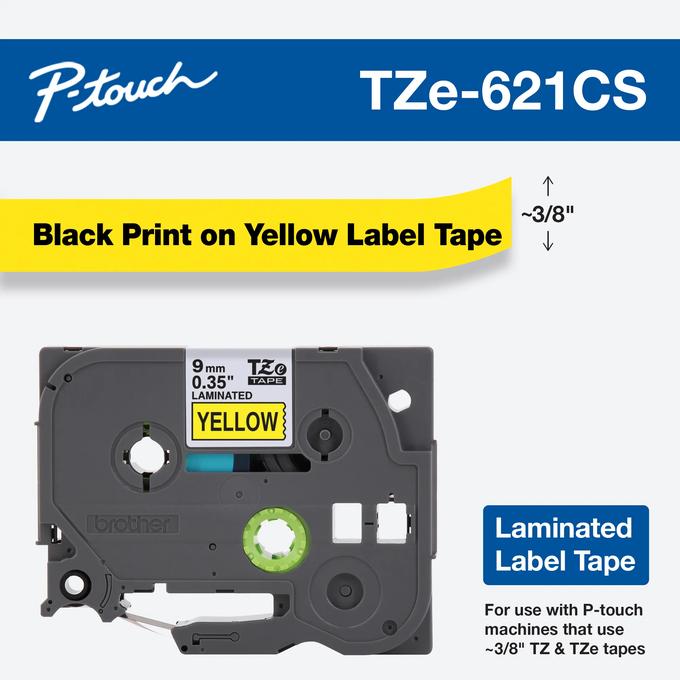
The exact PT1900C product record identifies TZe, not the older TZ family, and lists four widths: 3.5, 6, 9, and 12 mm. This is a useful range for ordinary narrow strip labels, but it does not reach 18 mm. Do not assume that another P-touch machine's compatibility table applies just because the model numbers look related. Brother marks this model discontinued, so a used listing deserves a close look at the label on the machine and the cassette bay; the seller's generic “P-touch” description does not establish that the unit is PT-1900C or that its included tape is the right family.
Brother identifies the PT1900C's tape as laminated and thermal-transfer. Those are meaningful media choices, but they do not guarantee adhesion on every surface or confirm which special cassette colors and adhesives are appropriate for a particular job. If labels will be exposed to a demanding surface or environment, select a compatible cassette by its own stated application guidance rather than extrapolating from the word “laminated.”
Two lines set a real ceiling
The exact page's maximum is two print lines. That makes a short name-and-detail layout more plausible than a multi-row asset label, but a line count does not tell you how tall the text can be. The PT1900C product data does not give a maximum combined print height, so do not choose it for a size-specific requirement such as “at least 9 mm of text” unless you verify that requirement from a reliable PT1900C-specific record. A label-length setting is listed, but the manufacturer page does not state its range; it should not be read as proof that the model can print any requested label size.
The QWERTY entry layout is useful when you prefer familiar letter placement over an alphabetic keypad. It does not answer other workflow questions. The exact product information does not establish a phone app, computer connection, cutter type, power route, body dimensions, or what was included in a particular box. If any of those details are essential, choose a listing that expressly confirms them instead of treating a keyboard or a long product title as evidence.
Where its alternatives pull ahead
The earlier PT-1810 is a different route rather than a drop-in substitute. Its exact Brother guide describes original TZ tape through 18 mm and up to three print lines on wider media, while Brother's PT1900C page documents TZe only through 12 mm and two lines. A buyer who already owns matching TZe supplies and needs short labels may prefer the PT1900C profile; someone who needs wider three-line output should inspect the PT-1810's TZ-only instructions and make sure those cassettes fit the job. Similar brand names do not make TZ and TZe interchangeable.
For a current-reference alternative using TZe up to 18 mm, compare the PT-D410 review. Its page-backed width range gives more room for a larger label than this PT1900C record does. That does not automatically make it better for a buyer with an older working PT-1900C, but it is the more sensible direction when wider TZe is a hard requirement. See the PT-1810 review for the separate older TZ path and package-specific tradeoffs.
A used unit needs a used-unit check
Brother labels the PT1900C discontinued, so this is an earlier-model decision rather than a routine new-machine comparison. Check the exact suffix on the unit, power it on, verify that its controls and feed/cut sequence work, and confirm the cassette family before buying supplies. Ask the seller what accessories and tape actually accompany that particular machine; an old model name is not a promise that a case, adapter, starter cassette, or printed manual remains in the box. If you need effortless phone design, guaranteed automatic cutting, wider media, or a known power setup, favor a model whose own documentation confirms that capability.
The PT-1900C can make sense when the documented QWERTY/TZe/12-mm/two-line profile is exactly enough and you are comfortable assessing an earlier unit. It is a poor fit for 18-mm TZe, a required print-height threshold, or any connection or accessory requirement that has not been confirmed for this exact configuration. Those distinctions matter more than its broad “Electronic Labeling System” name.
Sources: Brother's exact PT1900C U.S. product page and exact PT1900C support route. Related models are discussed only where their individual reviews document their separate configuration.
Key details at a glance
| Print process | thermal transfer |
|---|---|
| Maximum tape width | 12 mm |
| Maximum lines per label | 2 |
| Letter-key arrangement | qwerty |
Use the exact model’s instructions for operating limits, supplied equipment and version differences.
Sources for this assessment
Put the device and its tape system together.
Match the exact model, cassette family, computer or network route and any optional power or touch-panel hardware before buying.